Do women preach with a different ‘voice’?
 This is a invitee post by Liz Shercliff, who is Diocesan Director of Studies for Readers, Chester, and teaches for All Saints' Heart for Mission and Ministry.
'Jesus calls us to be fishers of men,' declaimed the preacher to a somewhat bemused baptism congregation. Beingness fishers was not an image that sprang immediately to heed, other than perhaps fishing by the side of the local lake. Only more importantly, what might fishing for men mean to the rather bonny, well dressed woman who was now addressing them? The very fact that the phrase was lifted from i of the Gospels and repeated by a woman without as well much thought caused confusion in the minds of the hearers.
Whether or non women preach with a different voice from men, the fact that the preacher is a woman tin can mean that the message is heard differently. Noise betwixt message and messenger consequence in subconscious meanings beingness transmitted, as well equally what is actually spoken.
The key question for preachers, nevertheless, is, 'Is information technology delivered differently?'
Christianity, from the commencement, has been an incarnated faith. Some will say that it was incarnated in Jesus, God in the form of a man, and that it should therefore proceed to be incarnated in men. This is not the place to enter that debate. Suffice it to say that I write from the perspective of a religion incarnated in all, men and women, who seek to follow Christ. Indeed, I would argue that unless the faith is incarnated in women too, information technology is but presented in part to those effectually.
There are two interlinked questions about women'southward preaching: exercise women preach with a unlike 'voice' from men? And should they?
Enquire a grouping of sixty or so students training for ordained and licensed ministries, who therefore spend a great deal of time listening to, preparing and evaluating preaching, and the response is a resounding 'yes', though few could articulate the reason for their answer.
A quick literature review yields little fruit, with the vast bulk from America, where the history of women preaching is very different. While books near women's ministry through the ages, women in mission and feminist interpretations of difficult texts abound, there is little that encourages women to develop a style that is true to their sex. Susan Durber published Preaching Like A Woman in 2007, some fourth dimension agone now, in which she argues for a deliberately feminist approach to preaching and presents several of her own sermons. Since then innovative piece of work has been thin on the ground, and some of the writing done on women in ministry has avoided speaking of preaching.
Whether or non women'due south preaching is in some way distinctive is often addressed with certain trepidation. Feminists seem to propose that women should consciously preach differently, in order to reclaim space defined and held by men. Conservatives (of both catholic and evangelical persuasion) tend to avoid an answer in the affirmative in instance it might claiming the authority of church building or Scripture. Perceived differences are therefore more likely to be attributed to personality type than to gender.
Both approaches conduct significant risk. If a sermon is near relating Word to earth for the present congregation, to what extent might a conscious intent to merits back occupied territory compromise the preacher, the sermon or even the Scripture? And what should be the authorization balance between Scripture and feminist critique? On the other manus, denying departure betwixt sexes by attributing all difference to personality smacks of a secular individualism anathema to the community of the church building, whilst as well ignoring all nosotros know about collective retentiveness and shared feel.
Conscious and Unconscious Difference
Women practise seem to preach with a unlike vocalism from men, whether intentionally or otherwise. They communicate differently even Elizabeth Aries (Men and Women in Interaction, 1996), who questioned the widely accustomed research on this came to the conclusion that while non all women communicated differently from all men, the sexes did exhibit unlike tendencies); they come to faith differently (Nicola Slee, Women's Faith Evolution, 2004); their life experience is unlike. Each of these characteristics volition influence the way women preach.
 Women'southward unconscious voice might include a tendency toward narrative rather than atoning preaching (on average women utilize 20,000 words a day, while men use only 7,000); greater focus on stories and illustrations from everyday life; vulnerability — only just if women are encouraged to preach authentically, rather than to emulate the preaching of male colleagues or lecturers.
Of course, unconscious communication is not always positive, and the preacher who feels that they are on 'foreign' territory or have no right to exist where they are will, at least in part, communicate equally much to their hearers. Equally, the woman who from childhood has learnt to win approving past 'girlish' behaviour might unconsciously autumn into that when preaching.
It is when women preach consciously every bit women that they have the near to offer. Durber suggests that women use preaching to repossess ground (the pulpit) that has traditionally belonged to men. From a feminist perspective such a view has much to recommend information technology. I believe that in that location are more than important reasons for women to preach every bit women. Firstly, women'southward joint feel is of life in a patriarchal order; as members of the less powerful group. While men are able to preach about marginalisation from an academic perspective, in Britain information technology is very difficult for a male preacher to preach with actuality about the feel of being marginalised. For most women preachers, powerlessness will have been lived at one level or another. When the preacher identifies this honestly, the Gospel is more than likely to audio existent to those in the pew.
A Wider Perspective on Scripture
Secondly, women reading Scripture self-consciously as women should detect much fabric at that place that is hidden from men readers. Google sermons on David and Bathsheba, for instance, and y'all will likely observe many that portray David every bit weak, in the wrong place at the wrong time, and fifty-fifty Bathsheba equally a temptress. Few option upward on the key words 'she was cleansing herself after her menstruum' (2 Samuel 11.four NRSV). Bathsheba was obeying the religious law when the king called for her considering he wanted to have sex with her. Even the story of the decease of the kid who follows this human activity is usually told from the human being's perspective. Women preachers should be in a position to fully explore stories such as this and gain from them comfort for those who are abused and oppressed. In other ways, the exploration of what is really happening in biblical texts, particularly to those on the edges of the story should encourage women to see their ain value to God. The church has too long promoted a Gospel in which men are the heroes and women the ill, weak or sinful. Preaching that regularly explores events from a liminal perspective should encourage Christians to develop a more enquiring mindset when approaching Scripture.
The problem, of course, is that colleges and courses training people for ministry building do not train women every bit preachers singled-out from men. Perhaps the larger problem is that courses on preaching are predominantly taught by men, and the masculine arroyo is accounted to be the 'norm'. At that place is a danger of depending on the structure of sermons as communication and slotting preachers into them, instead of recognising and developing the strengths and communication styles of the sexes and exploring ways of using them to full effect in preaching. Again, I do non envisage a dualistic split, simply a spectrum or tendencies and experiences.
Preaching that Speaks to Women (and Men)
My third point is probably the about contentious. Sermons based on a patriarchal view of spirituality and discipleship tend to focus on masculine weaknesses, while feminine failures are seldom mentioned. Typically, we might hear pride and selfishness denounced and care for others promoted – and many women in the congregation will not experience challenged, because they can signal to the number of others they care for.
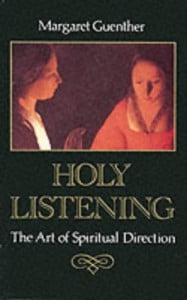 Margaret Guenther (Holy Listening, 1992) says, 'The fourth dimension I have spent listening to women'southward stories has convinced me that in that location are distinctly feminine patterns of sinfulness, and that pride is not women's besetting sin … even as they talk of pride they are feeling worthless and powerless'. Saving suggests that 'temptations of woman equally adult female are not the same equally the temptations of man as man'. At any rate, in that location is sufficient evidence to suggest that the widely accepted definition of sin as prideful does non match the experience spiritual directors and theologians have of women.
A sermon addressing these bug might bargain quite differently with Romans 12:three than ane approaching the text from a purely androcentric perspective. 'Thinking of oneself with sober sentence,' might mean recognising strengths besides as identifying weaknesses.
Slee (2004) found that the 'majority [of women] offered explicitly relational models of faith … agreement faith as being in relation with God and/ or the Other'. They are more likely to recollect of sin every bit cleaved relationship rather than specific wrongdoing. In a recent TED talk Rita Pierson spoke of the importance of accurate relationship in order to support development. She was speaking of children, but the same is likely to exist truthful of adults, that we only really larn from those we feel we know and can trust. If preachers hibernate behind their words rather than reveal something of themselves, hearers are unlikely to observe the actuality they seek. Paul was able to say 'be imitators of me' considering the Christians at Corinth had got to know him. Preaching that appeals to women, and is true to female tendencies, is perhaps more relational than academic (although audio study should stand behind it) taking hearers on a journey through the passage, rather than presenting propositions about information technology, and including aspects of the preacher's own religion.
Unless preachers, especially women preachers, go to grips with preaching near the experiences of women, the organized religion will not be truly embodied for the whole community. While women, I believe, should preach as women they should avert speaking only to women. The aim should be to image God amend by preaching, and hearing, human, gendered sermons rather than androgynous sermons aimed at homogenous congregations. This will benefit both women and men, past allowing them to enter into each others' experience and agreement of God, mayhap by opening Scripture differently, and by offer a bigger motion-picture show of the One we seek to follow.
Do women preach with a different vocalism from men? I think so.
Should they do so? Yes, for the sake of a holistically incarnated gospel.
The side by side question might be 'should churches and training institutions do anything about it?'
(This was first published in The Preacher (No 154), journal of the Higher of Preachers.)
If you lot enjoyed this, do share it on social media (Facebook or Twitter) using the buttons on the left. Follow me on Twitter @psephizo. Like my page on Facebook.
Much of my piece of work is washed on a freelance basis. If you have valued this post, you can brand a single or repeat donation through PayPal:
Comments policy: Good comments that engage with the content of the post, and share in respectful debate, tin can add together real value. Seek outset to understand, so to be understood. Make the about charitable construal of the views of others and seek to larn from their perspectives. Don't view debate as a conflict to win; address the statement rather than tackling the person.
Source: https://www.psephizo.com/preaching-2/do-women-preach-with-a-different-voice/

Post a Comment for "Do women preach with a different ‘voice’?"